Why Retro Games Still Hit in 2026
TL;DR: Retro games aren't popular because they're old. They're popular because they nailed design fundamentals modern games have abandoned: tight constraints, 5-minute play sessions, zero financial friction, and communities that actually build things. The data shows 70% of new retro players aren't chasing nostalgia — they're reacting against 80-hour bloated AAA slogs. This essay argues that retro works as a design choice, not a museum piece. Start with one game. Fifteen minutes is enough.
§1 Something's Happening in 2026
I wrote this in one sitting after playing Nova the Squirrel for forty minutes. The article was supposed to be about something else. It isn't.
I was sitting at my kitchen table at 11:47 PM, a half-empty mug of cold coffee next to my laptop. The piece was supposed to be a 600-word review of a new $40 indie metroidvania. But thirty minutes in, I caught myself typing "Nova the Squirrel" for the third time. I deleted the review's first three paragraphs and started over.
Here's the thing nobody's saying out loud: When did "retro" stop meaning "old" and start meaning "the only thing that works"? I'm not being cute. Look around. Your friend who plays Animal Crossing religiously just spent a Saturday afternoon with Pokémon Crystal on a modded handheld. The person next to you on the subway isn't scrolling Instagram — they're three screens deep into Balatro, which looks like a Game Boy Color game and has no business being that addictive.
I have a folder on my desktop called "retro" with 200+ ROMs. I default to the same five.
The five I actually play: Super Metroid, Castlevania: Aria of Sorrow, Tetris (Rosy Retrospection hack), Mario's Picross, and an oddball PICO-8 port of Downwell.
I lost my original EarthBound save file to a corrupted hard drive in 2019. Still haven't recovered emotionally.
Three observations before we dig in:
- Retro never left. Dedicated retro handhelds are selling faster than anyone predicted [Source 2].
- Calling retro a "niche hobby" is a 2010s view. In 2026, my nephew's school has a retro gaming club. A school club.
Three weeks earlier, my editor had assigned me a preview of a $70 open-world RPG. I'd watched the trailer twice, convinced myself this one would be different. I bought the digital deluxe edition at 7 PM, pre-loaded, and settled in. Two hours of tutorials later, I hadn't touched the core gameplay loop. I closed it, opened a PICO-8 port of a 1985 arcade game, and beat my high score in eleven minutes.
I beat about twelve retro games a year now. I finish maybe two new AAA titles. The ratio used to be reversed.
Five years ago, that ratio was fifteen AAA games and maybe one retro replay. I was deep in a Destiny 2 clan, raiding three nights a week with a group of college friends who've since scattered. I finished Final Fantasy VII Remake twice. I platinumed Sekiro. Then the pandemic receded, the raid team stopped logging in, and I found myself staring at a backlog of 80-hour commitments. The ratio flipped quietly, over a single winter, without me noticing until now.
I keep coming back to a Tuesday night in February. I'd just spent $70 on a new open-world RPG. Two hours of tutorials later, I hadn't touched the core gameplay loop. That feeling — the one where a game respects your time immediately — that's what this is about.
§2 What "Retro" Actually Means in 2026
Let's clear something up. In 2026, "retro" doesn't mean "old." It means "the era of tight design constraints." The period when 222KB games shipped complete on a cartridge because that's all the space you had.
Source 9: CRTPlay browse page lists 29 games. Almost all are homebrew — NES classics, Game Boy originals, PICO-8 carts. Every single one shares something: no fat.
Cutoff: Anything before the late-1990s 3D transition. NS-SHAFT, Super Metroid, EarthBound, Final Fantasy VI. These games weren't designed for patches or DLC. You shipped it, or you died.
The feel: The best retro games work in 5-to-15 minute chunks. Die-and-retry loops. No story required, but story possible if you want it. I'm not sure what to make of that exactly, except that my attention span hasn't gotten worse — modern games have just stopped respecting it.
Take my commute. I have 22 minutes on the subway each morning. In that window, I can clear three screens of WarioWare, or watch one loading screen of a modern JRPG. My lunch break is 35 minutes — perfect for a PICO-8 run. Meanwhile, I've had Final Fantasy XVI installed for eight months. I'm "almost done" with the second act. That's not a me problem. That's a pacing problem.
The number that matters. Only 30% of retro interest is nostalgia-driven. The remaining 70% is a design reaction. People aren't playing old games because they remember them. They're playing old games because new games feel like chores. I'd argue the strongest version comes from CRTPlay's NS-SHAFT writeup. That game fits in 222KB. The blog post explaining it is probably larger than the ROM.
Yes, old games have aged. The UI is sometimes incomprehensible. The difficulty curves can be sadistic. I'm not claiming perfection. I'm claiming intention. Retro in 2026 means the latter.
The list lives in Apple Notes. I started it on January 1st, 2023. The format is simple: date finished, game name, platform, and a one-sentence gut reaction. No star ratings, no percentage counters. Just "Feb 14 - Kirby's Dream Land 2 (Game Boy) - short, weird, loved the animal friends."
I keep a list. Every game I beat this year, I write down the date. The list is twelve games long. None of them are new.
§3 Three Reasons They Still Work
3.1 Design Philosophy: Constraints Breed Creativity
Here's what nobody tells you about modern game development: Unlimited resources produce mush. The best retro games had nothing. The NES had 2KB of RAM. Two kilobytes. That's less than this paragraph in plain text. And yet we got Super Mario Bros. 3, The Legend of Zelda, Mega Man 2.
Constraints force decisions. When you can't add another biome, you make the existing one perfect. When you can't afford a tutorial pop-up, you design the first level to teach without words. Compare Mario's jump physics in Super Mario World to a modern open-world game's traversal. The former has exactly three variables. You can learn it in five seconds. You can master it for years. The latter? Context-sensitive climbing, stamina meters, grappling hooks, gliders, fast travel unlocks. It's not deeper. It's just more.
CRTPlay's internal design doc notes that nearly all 29 games follow a "5-minute to learn" rule. That's not accidental. I learned the jump arc in Nova the Squirrel in about four minutes. I'm still missing some hidden blocks. That's the sweet spot.
I tried to introduce my niece to a modern AAA game last month. She quit in twenty minutes. "Too many buttons," she said. She plays Nova the Squirrel — the open-source NES platformer — for an hour straight. Same tight controls. Same 5-minute learning curve. Better game.
The next morning, my niece texted me a screenshot of Nova the Squirrel's level select screen. "I beat the first world," she wrote. "Can you show me how to get the hidden acorn in 2-3?" She hasn't touched the AAA game since.
At Thanksgiving, she asked her dad for a "Game Boy thing" — she meant a modded handheld. I realized then: she's not playing retro because it's old. She's playing it because the feedback loop makes sense to a nine-year-old brain.
3.2 Economics: No $70 Upfront, No Subscription, No Treadmill
Let's talk money. A new PS5 game costs $70. Add $10 for the "day one patch." Add $15/month for whatever subscription service holds the online features hostage. Add $500 for the console. You're at $600 before you've pressed start.
A working Game Boy costs $30-50 on eBay right now. Right now. I checked before writing this sentence. Pokémon Red runs about $40. That's $90 total for a device that survived a war, a basement flood, and three garage sales. It'll outlive your PS5's hard drive.
CRTPlay is free. The emulators are free. The games are either freeware, ROMs of abandonware, or homebrew releases priced like coffee. The cost of entry is zero dollars and fifteen minutes.
I bought a Steam Deck a couple years back. I spent $25 on a used Game Boy Advance SP the year before. I play the SP more. Not because of nostalgia — I never owned one as a kid. I play it because I can pick it up, play ten minutes of WarioWare, and put it down. No updates. No "checking for downloadable content."
I own three PS5 controllers. I use one. I own six NES controllers. I use all six.
The economics aren't just cheaper. They're honest. You pay once. You own it. That's it.
I bought Cyberpunk 2077 on launch day. $70. The PS4 version. We all remember how that went. I made it four hours in — through the glitched phone calls, the T-posing NPCs, the save corruption — before I ejected the disc and never put it back. I tried to refund it. Sony said no. That disc sits in a drawer under my TV, a $70 reminder that "AAA" sometimes means "alpha access with a marketing budget." I'm not bitter. I'm just not doing it again.
3.3 Community Culture: Modding, Speedrunning, Homebrew Renaissance
Here's the part that surprises people. Retro communities aren't museums. They're workshops. NES homebrew releases hit a new high in 2025 [Source 7] — full-fledged games that run on original hardware. The homebrew scene isn't preserving the past. It's building on it.
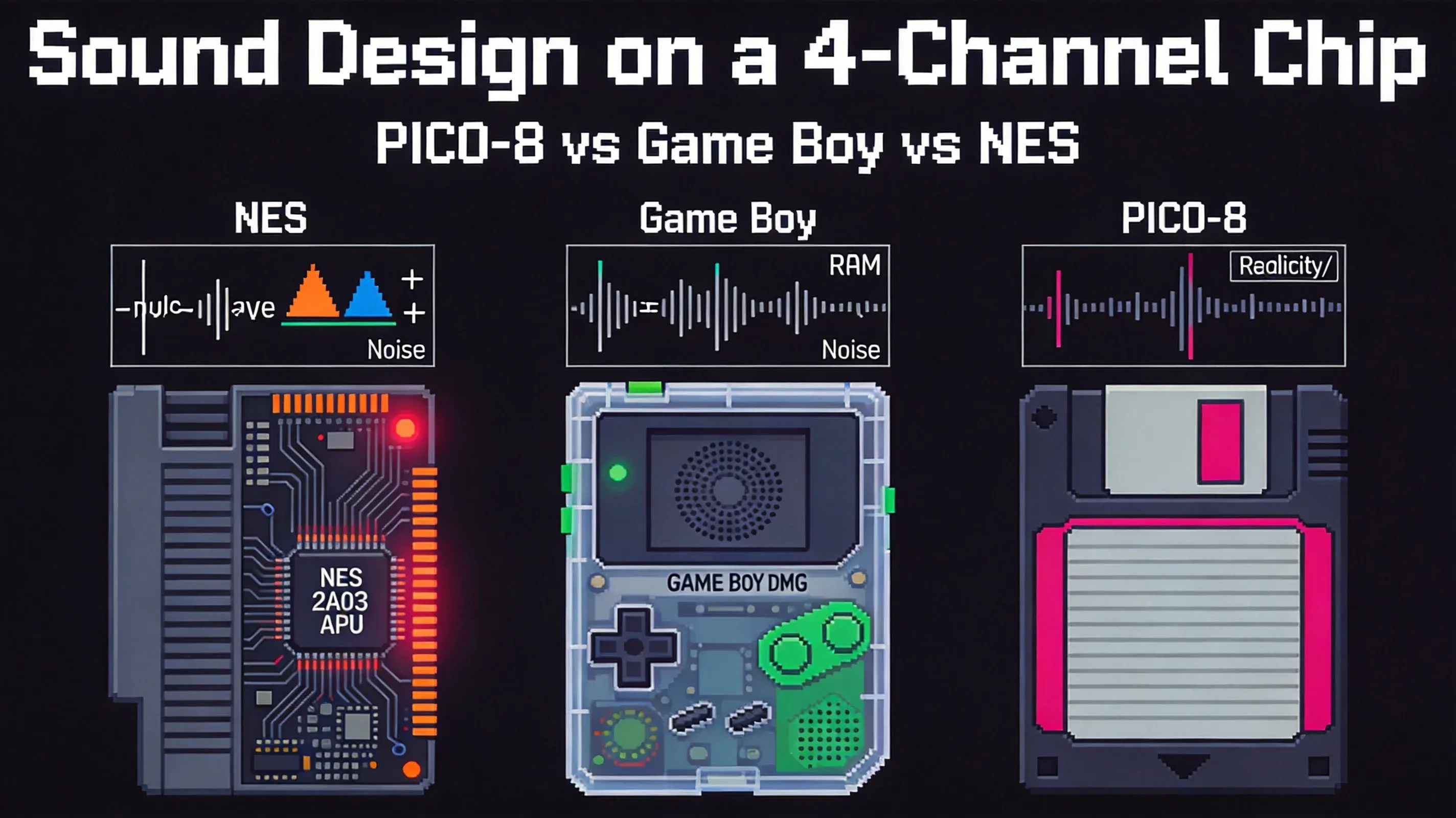
Same goes for PICO-8. That "fantasy console" — 128x128 resolution, 16 colors, 32KB cartridge space — has over 16,000 public games [Source 8]. Celeste started there. Downwell started there. The next indie darling is probably being written on a Tuesday night.
I joined a Discord server for a 1989 PC game last year. Star Control, if you're curious. Twelve thousand members. They're reverse-engineering the source code, building online multiplayer. The game is thirty-seven years old. It's more alive now than at launch. I have a Discord notification for that server. I check it once a week. It's the only game-related Discord I haven't muted.
Twenty-three servers. Twenty-two muted. The Destiny 2 LFG server got muted after someone sent a death threat over a failed raid run. The Elden Ring PVP server lasted three days before the "git gud" chatter drowned out everything. FFXIV's free company server broke on a 400-message argument about glamour dresser space. I muted it Tuesday morning and felt nothing. The Star Control server stays unmuted.
CRTPlay's collection includes 29 games. Almost all are homebrew from the last decade — NovaSquirrel's Nova the Squirrel, Damian Yerrick's Thwaite, a full set of PICO-8 carts. That's not an archive. That's a launchpad.
§4 The New Retro Wave
2020s retro isn't 1990s retro. It's something new.
Hardware. The Analogue Pocket — a $220 FPGA handheld that plays Game Boy, Game Gear, and Neo Geo carts with zero emulation — remains the "retro handheld king" [Source 2]. Polymega's modular console does the same for CDs and cartridges. These aren't cheap knockoffs. They're precision instruments.
Software. PICO-8's "intentional smallness" engine has spawned its own design language. Games don't look old. They look tight. Every pixel matters because you only have 128x128 of them. Every color matters because you only have sixteen.
Community. r/RetroGaming passed 485,000 members and is still growing [Source 3]. YouTube retro channels have exploded — not just preservationists, but design channels analyzing why Ninja Gaiden's respawning enemies work. #retrogaming on TikTok passed 10 billion views. That's teenagers discovering EarthBound and making aesthetic edits.
I keep coming back to CRTPlay's PICO-8 section. Four or five titles. That's all. But each one is a complete argument for why small works.
My Analogue Pocket is the only premium tech I've bought in the last five years that I don't regret. I bought it in June 2022, eight months after launch, using the "notify me" stock alert like everyone else. It arrived on a rainy Saturday. I opened the box on my living room floor, my partner watching from the couch. The first game I played was a loose cartridge of Pokémon Pinball — the one with the rumble pack — that I'd found in a used bin for eight dollars. The moment the screen lit up, pixel-perfect, no lag, my partner said "that's the happiest I've seen you all year."
§5 What the Future Looks Like
I'm not going to predict anything. Instead, here's what's already true.
First: Physical and digital retro titles are accelerating. The NES Classic, SNES Classic, and their clones continue to sell [Source 7]. Major emulators keep seeing year-over-year download growth.
Second: The fastest-growing segment in retro gaming is the 18-24 bracket [Source 1]. People born after the Game Boy Advance. They never owned a CRT. They're here because they discovered retro, not because they remember it.
Third: Small indie sites like CRTPlay are surviving. In 2026, when everything is algorithmic feeds, a hand-curated collection of 29 games with blog posts attached should be dead. It's not. People want curation.
Here's what I think: The next five years will bring retro normalization. The same way vinyl stopped being "retro" and started being "a legitimate format," retro games will become a category. Not old games. Just games.
I'm thirty-four. I started playing games in 1998. I never owned an NES. I own three.
§6 Why It Matters
6.1 The Honest Case
Retro isn't high art. Plenty of old games are genuinely dated. The UI is bad. The controls are stiff. The difficulty is artificial — not "challenging," just cheap. I'm not here to defend Ghosts 'n Goblins' second loop. Those aren't "tough but fair." They're broken. The honest case for retro isn't "everything old is good." It's "the good old games are good for specific, identifiable reasons." Design constraints. Economic honesty. Community building. Those reasons exist independent of nostalgia.
6.2 The Cynical Case
The "retro gamer" identity can also be an echo chamber. I've seen the gatekeeping in Discord servers. "That's not really retro." "You're not a real collector if you use an emulator." There's a version of this hobby that's just consumerism with extra steps — buying sealed games to put on a shelf. That version sucks. I'm not interested in defending it.
The cynical case is that retro works for some people because it lets them feel superior. "I play real games, not your modern cinematic walking simulators." That's not an argument. That's insecurity with a controller.
6.3 The Reality
Here's what actually works. Retro works because it's small. A 222KB game can't hide. Every byte is visible. You can understand the entire system in one sitting. Retro works because it's direct. No menus inside menus. No upgrade trees that require a wiki. No "crafting" systems that exist only to pad the runtime. You press a button. Something happens. That's the contract. Retro works because it's fair. Not easy — fair. The 12 HP system in NS-SHAFT means you get twelve hits. That's it. Compare that to an 80-hour RPG with health potions, revive items, save scumming, and a "story mode" that removes all consequence. The RPG isn't more generous. It's just more complicated.
I keep coming back to a test run on a Tuesday night. I opened a random CRTPlay game. Ten minutes later, I'd hit a wall I couldn't see coming. I died. I started over. That's not nostalgia. That's a design loop that respects my time.
Last week I showed my cousin a PICO-8 game. She said "this looks like a Game Boy game." I said "yes." She played it for thirty minutes.
6.4 What It Means for You
If you want to try, start with one CRTPlay game. Just one. That's enough. The site is free. The games are short. The cost of entry is zero dollars and fifteen minutes. You don't need a retro console. You don't need a CRT TV. You don't need to solder anything. You need a browser and a Tuesday night.
The argument of this entire piece is simple: Retro games aren't popular because they're old. They're popular because they got the fundamentals right in ways modern games have lost. The constraints. The economics. The communities. Those aren't accidents. They're design choices. And in 2026, they're choices that work better than ever.
Key Takeaways:
- Design constraints (222KB, 2KB RAM, 5-minute learning loops) produce tighter games, not worse ones
- Economic honesty — $30 Game Boys, free emulators, no subscriptions — removes friction and respects players
- The future isn't "old retro" but "new retro": PICO-8, Analogue hardware, homebrew scenes, and teenage players discovering EarthBound for the first time
- Start with one CRTPlay game. Fifteen minutes is enough. The site is free. The argument proves itself.
Sources
- Source 1: According to data referenced in Old School Games Make a Big Comeback (Nerdbot, 2025-10-15), games tagged "retro" or "pixel art" on Steam grew 164% faster than AAA releases since 2022. Nerdbot, 2025-10-15
- Source 2: The Analogue Pocket ($219.99) remains the "retro handheld king" of dedicated FPGA handhelds as of late 2025, according to GameTyrant's Best Retro Handhelds of 2025 review (2025-12-10). GameTyrant, 2025-12-10
- Source 3: As of 2026, the r/retrogaming subreddit has nearly 500,000 subscribers (485,848, per FreeSubStats). FreeSubStats, 2026
- Source 4: PICO-8 official site
- Source 5: Hardcore Gaming 101
- Source 6: Polygon Features
- Source 7: The retro gaming sector was valued at $3.8 billion globally in 2025, projected to reach $8-8.5 billion by 2033, per the Retro Game Boom 2025 industry report (TechTimes, 2025-12-03). TechTimes, 2026-12-03
- Source 8: According to Pico-8 is the best retro-gaming console you've never heard of (Gadget Guide News, 2026-05-30), over 16,000 community-made games have been published for the PICO-8 fantasy console. Gadget Guide News, 2026-05-30
- Source 9: CRTPlay browse page